
Workshop detail header
Workshop notes

Mechanical Bitcoin movement

Build logs, machining experiments, watchmaking notes, and lessons from trying to make a mechanical watch shaped by Bitcoin.

This is the main record of the project: what worked, what failed, what changed, and what I learned along the way.

2026/05/10 18:35 UTC
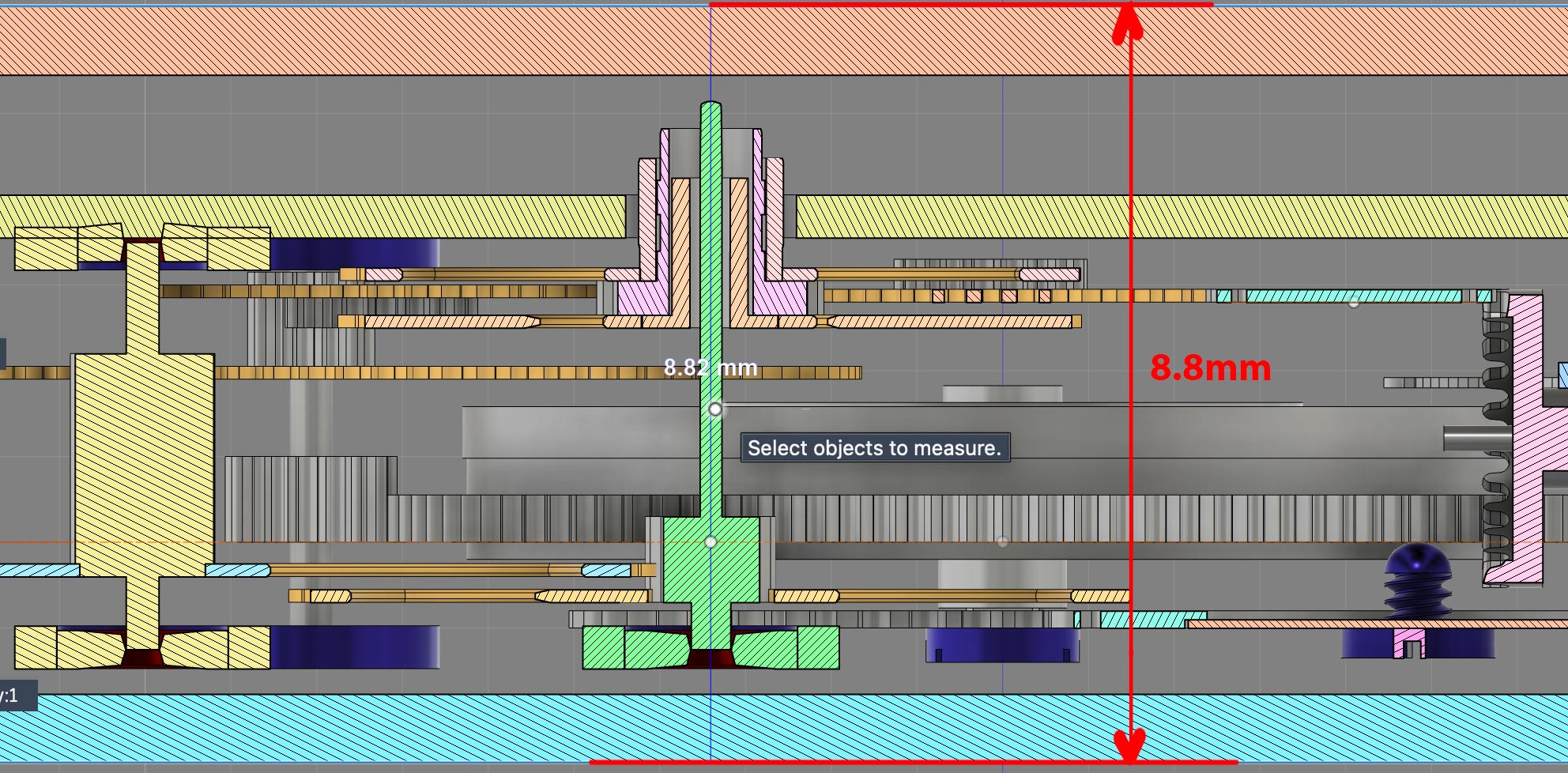
TLDRThe keyless finally started working as one system, and that unlocked a big step forward: the movement is down to 6.6mm, with ~8.8mm total thickness possible. It mattered because getting there took fixing a flawed cannon pinion design and debugging the stem/yoke/setting lever one function at a time.
Show more Show less

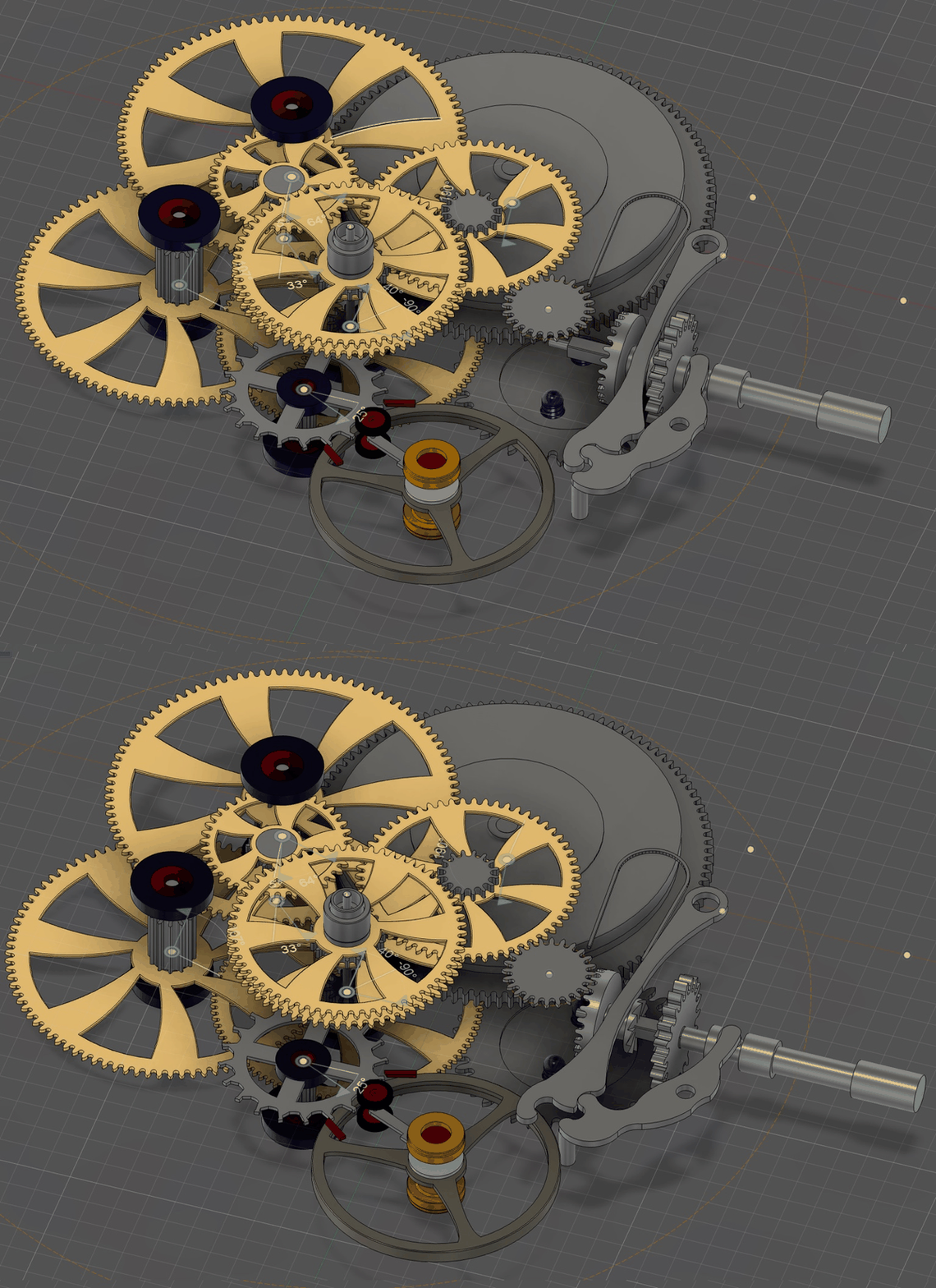
Small win this week: the winding stem, yoke, and setting lever are finally starting to behave like one system instead of three separate problems 👍

The keyless works area fought me hard. Tiny geometry changes, recut parts, assemble, test, tear down, measure, repeat. A lot of “wait
 why is that touching?” moments.

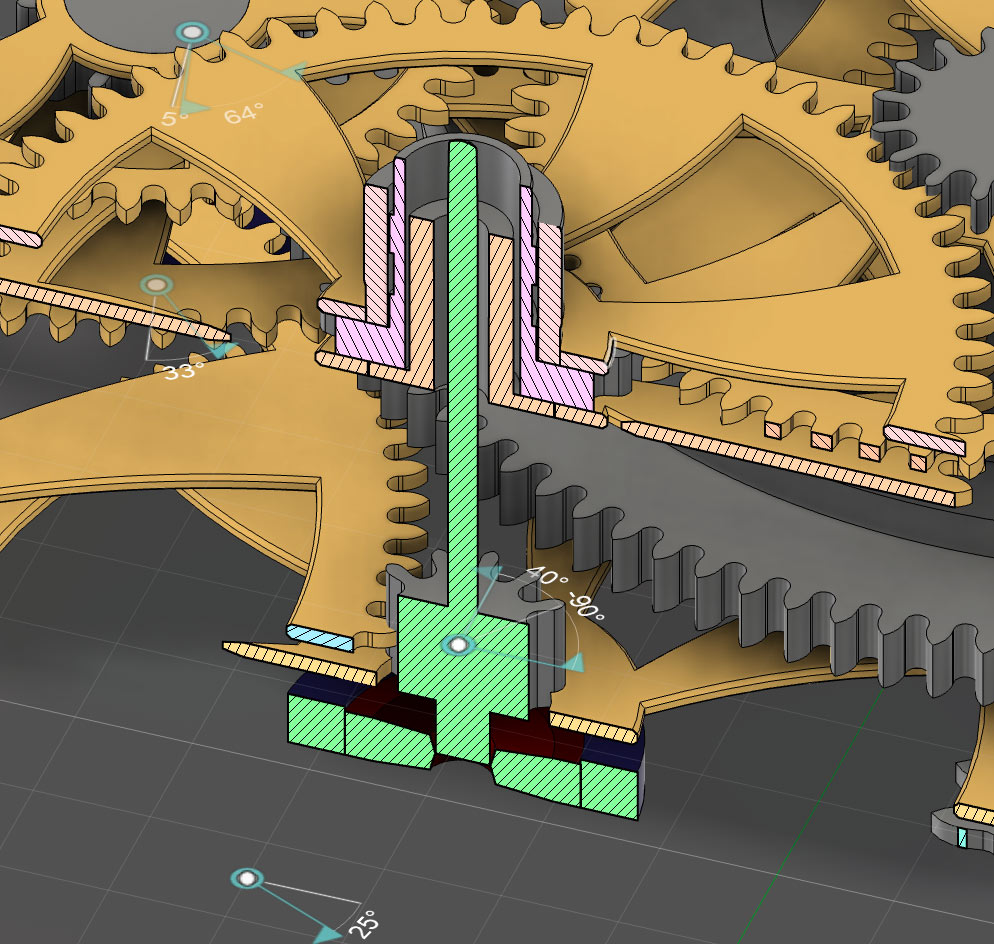
Loss: I had to re-work the cannon pinion. Turns out my previous design didn’t actually let it slide properly, which means setting the time would have been
 impossible 😅

Win: the stem now has a clearer feel between positions, the yoke is moving the sliding pinion more predictably, and the setting lever is finally starting to make sense in the assembly.

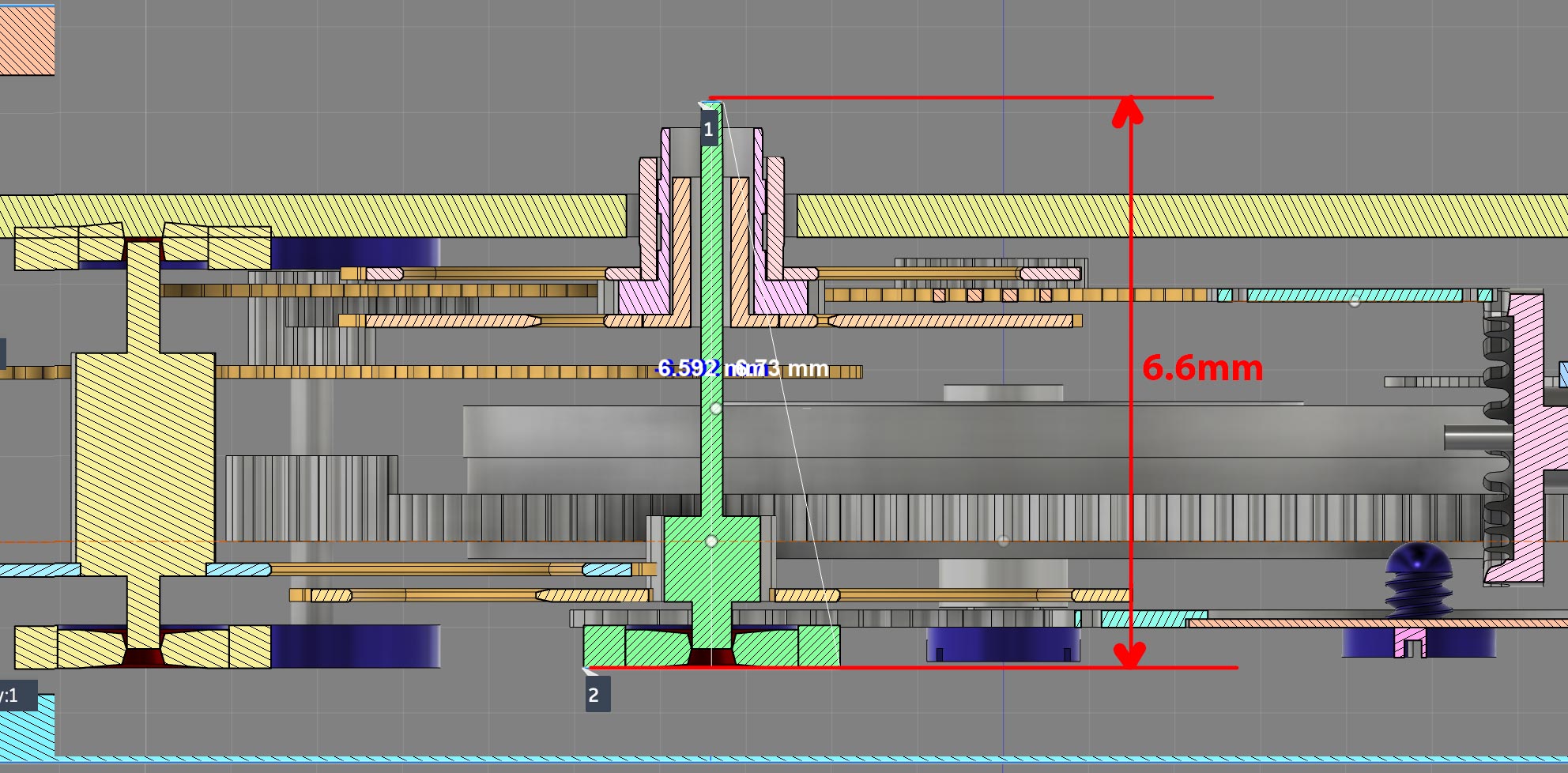
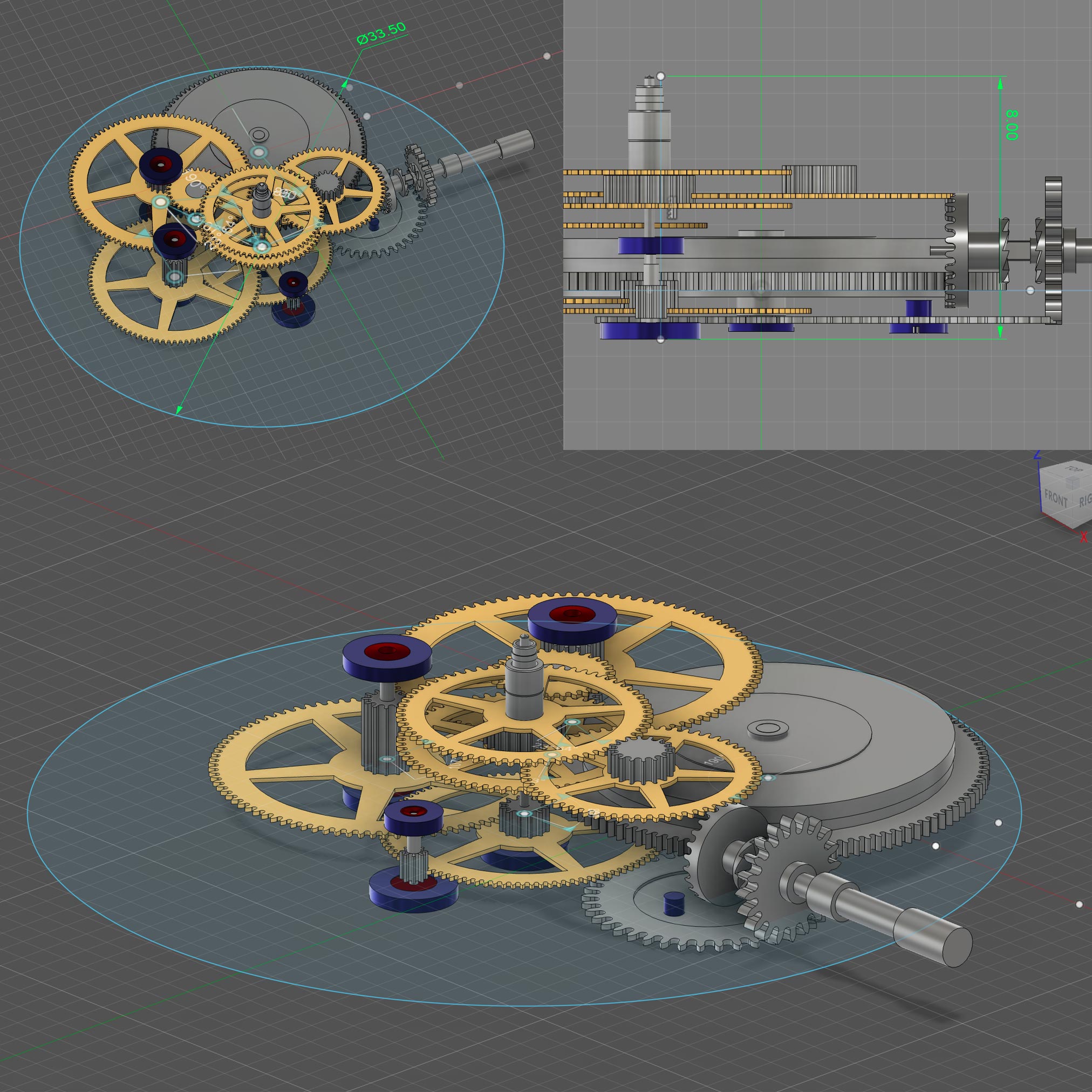
Big win: I managed to compress the movement even more, down to 6.6mm. If the case and sapphire stack behave, I might be looking at around 8.8mm total. For me, that is monumental.

Honest version: this whole area humbled me.

A few times I thought I had it, then one pull on the stem exposed the weak spot. Sharp corner. Spring face slightly off. Part looked fine alone, wrong in assembly.

What helped was slowing down and separating the problem:

  • Position feel first.
  • Then engagement.
  • Then release.
  • Then hacking.

Less guessing. More signal.

Still not final-final, but now the setup is predictable. That feels like real progress.

Next: bridges. And yes, power reserve is still in the back of my mind đŸ€” Simple idea. Not simple to build.

Read standalone post

2026/05/03 20:16 UTC
TLDRSteel delays paused the cutting tests, so the real progress was in the watch movement: the model is tighter, thickness dropped from 8.833 mm to 7.5 mm, and 6 mm still looks doubtful because the hand stack keeps eating space. It matters because the design is getting more parametric and realistic, with the balance wheel now switched to safer, more standard nickel silver.
Show more Show less

Two weeks waiting on 309 stainless. That still blocks the heat-treat tests for the O1 and A2 bits.

The comparison is still the same plan: harden both, cut with both, then check tool life, finish, and edge stability under load. Until the steel arrives, there is no point guessing.

So I kept pushing the watch script instead. That is where the useful change happened.

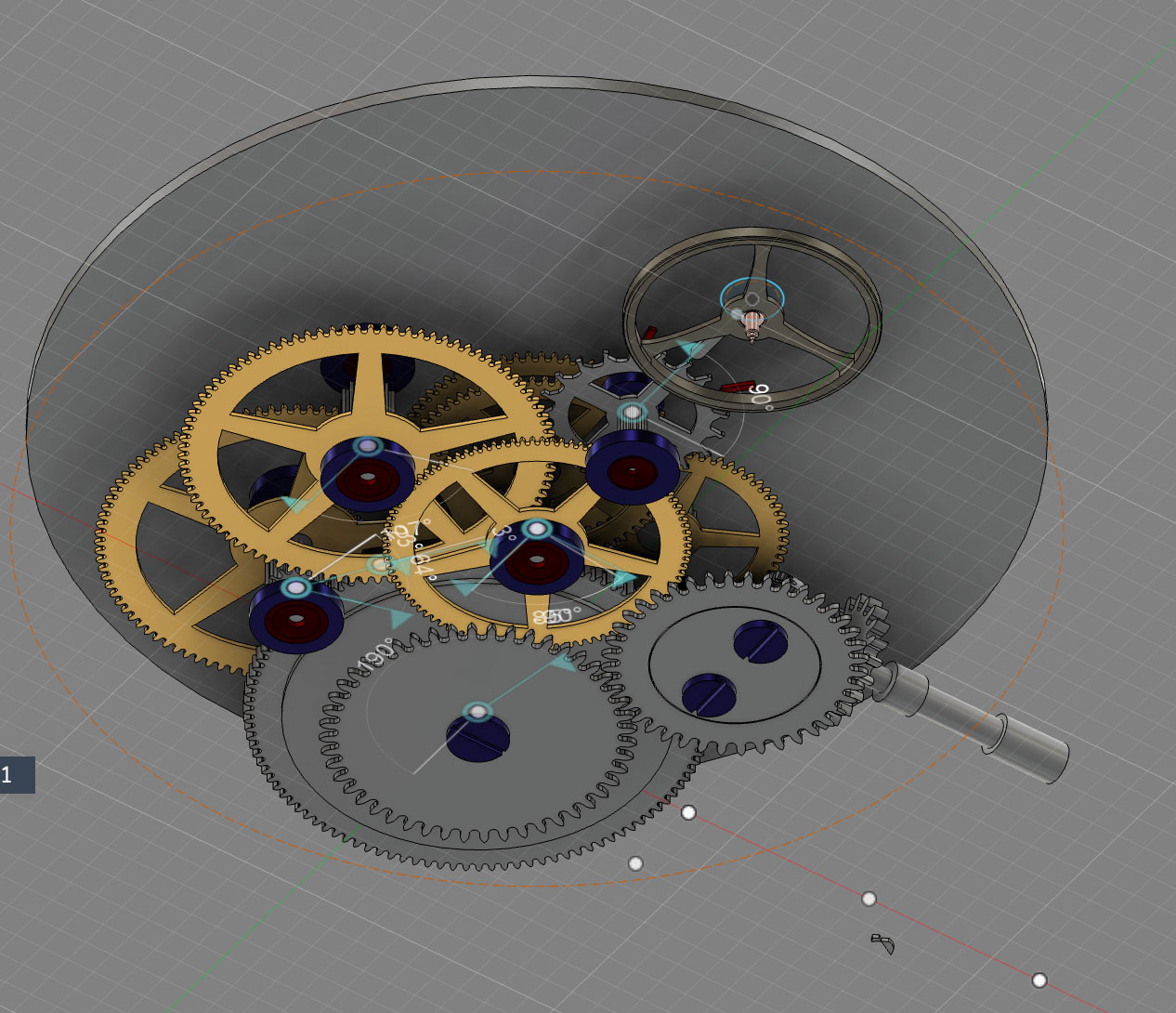
More of the geometry lives in the model now. One change can propagate through the movement instead of turning into a pile of manual edits.

Height is still the fight

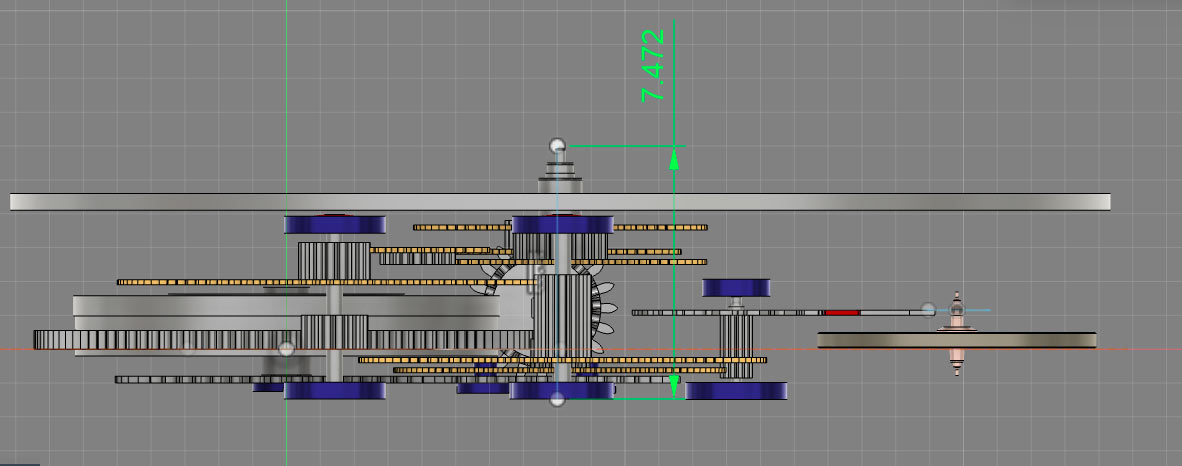
The movement started at 8.833 mm. It is now at 7.5 mm.

That removes 1.333 mm, which is real progress. The target is still 6.0 mm, so there is 1.5 mm left to find.

The last 1.5 mm is the ugly part. The co-axial hand stack for hours, minutes, and seconds keeps eating space.

Each layer needs thickness, clearance, and enough stiffness not to create a new problem. Honestly, I am not sure 6 mm is possible with that layout đŸ€”

Diameter and overall target

Diameter is landing well at 32.5 mm. That part looks promising.

The bigger target is still a 38 mm watch around 9 mm thick overall. That feels like the right direction, even if the movement needs more rounds.

Material change: balance wheel

I also changed the balance wheel material. After reading more, I ruled out carbide and copper beryllium.

Milling both carries hazards I do not want in the shop. So the balance wheel is now nickel silver instead, which also tracks better with NIHS standards.

Still waiting on steel. But the process moved: tighter model, thinner movement, better material choices.

Read standalone post

2026/04/21 00:06 UTC
TLDRFirst clean A2 cut with the custom tool finally happened, and it looks like a real process breakthrough—not luck. It matters because the result came from months of invisible prep: better machine alignment, rigidity, tool design, and Kevin’s steady work.
Show more Show less

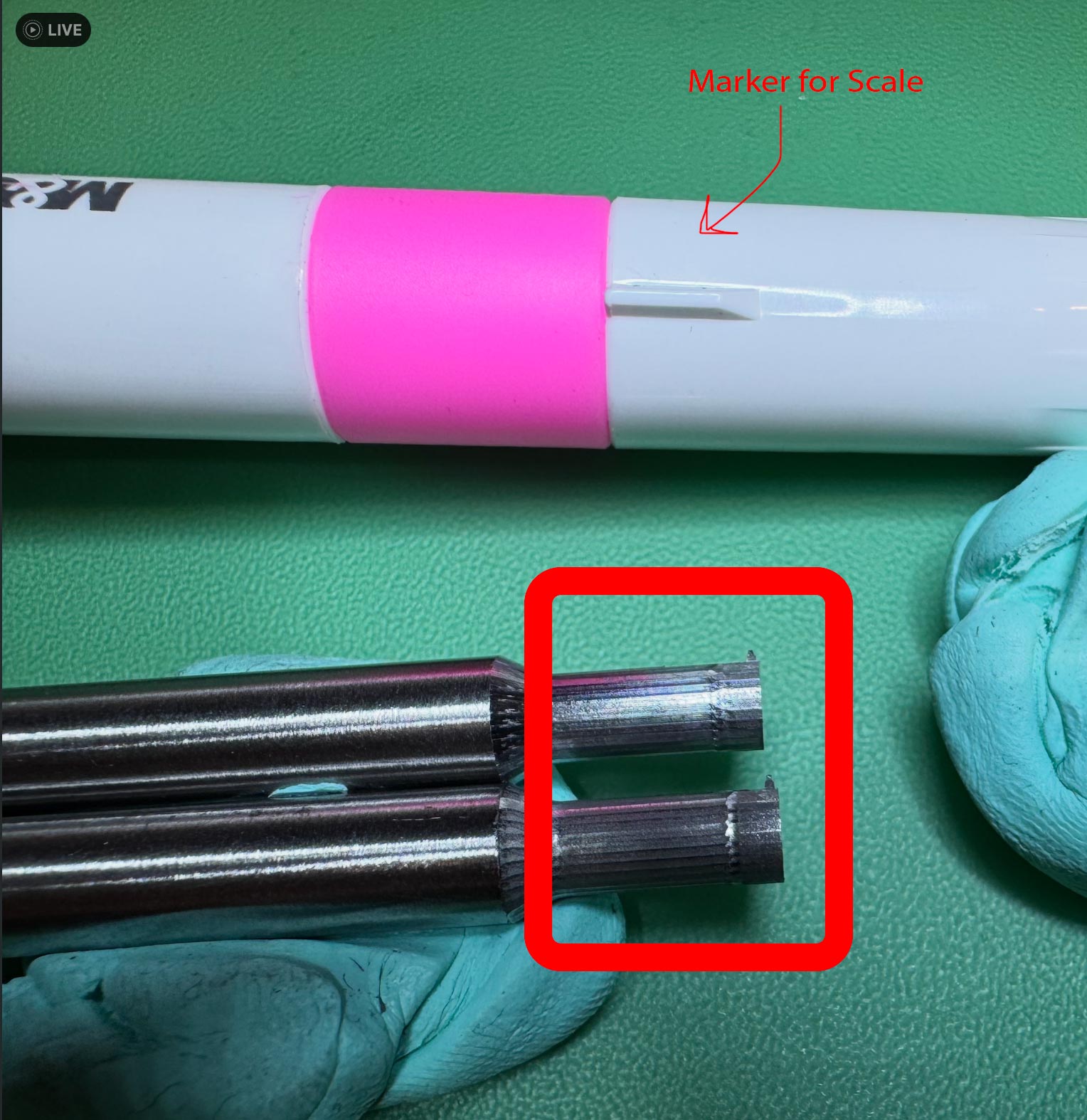
We got the first clean cut in A2 today with the custom tool I made for this job.

That was the wall for a while. Harder material. Less forgiveness. More ways to expose a weak setup.

Today the stack finally lined up. Tool, machine, and process all did their part.

A lot of that traces back to Kevin.

He has spent months on the machine work that usually stays invisible. Alignment. Rigidity. Chasing small errors until they stop showing up in the cut.

Nothing flashy. Just changes that actually moved the process.

You could see that in the cut right away. Not just that the toolpath finished, but that the whole operation felt controlled. Less forcing it. More like the machine was finally telling the truth.

I struggled with how far away this kept feeling. Slow progress. Unclear causes. Then one run makes the stack visible.

This one belongs to the prep as much as the cut. The tool design mattered. Kevin’s machine work mattered. The patience mattered.

Kevin has been an awesome teammate through all of it 👍

What changed today was not luck. It was accumulated work paying off.

On paper, it is simple: first successful A2 cut with the fancy tool. On the bench, it is a real step forward.

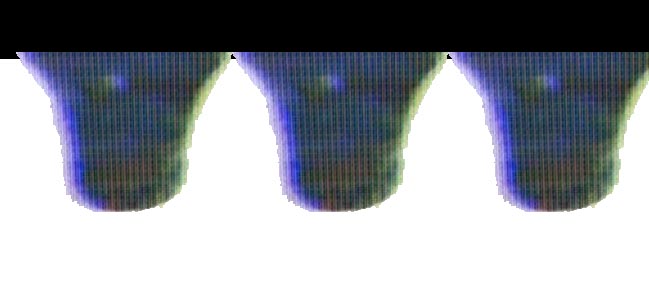
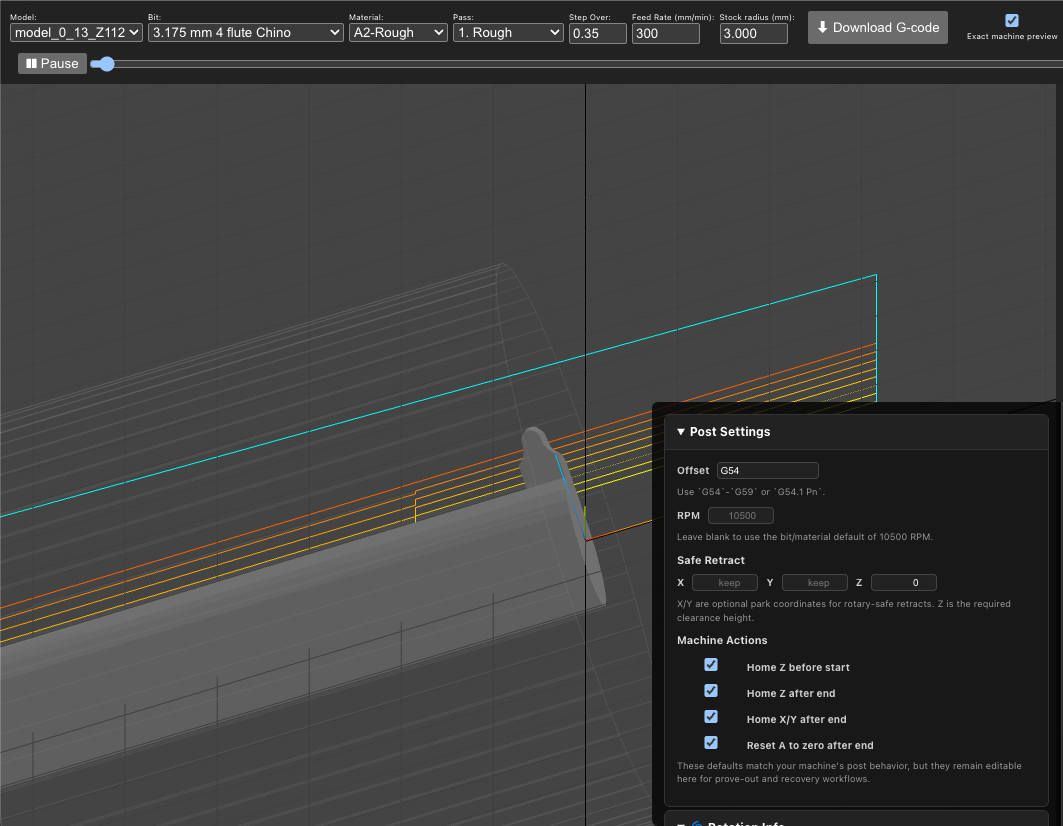
Heres how the m=0.13 looks for the wheel and pinion, this is the mainspring barrel teeth

Read standalone post

2026/04/18 23:21 UTC
TLDRThey finally made usable wheel teeth after 1.5 years—not by changing the tooth design, but by getting the mill stable enough and building a custom tooling/workflow around it. Brass was the proof step; next comes A2 rod, then carbide.
Show more Show less

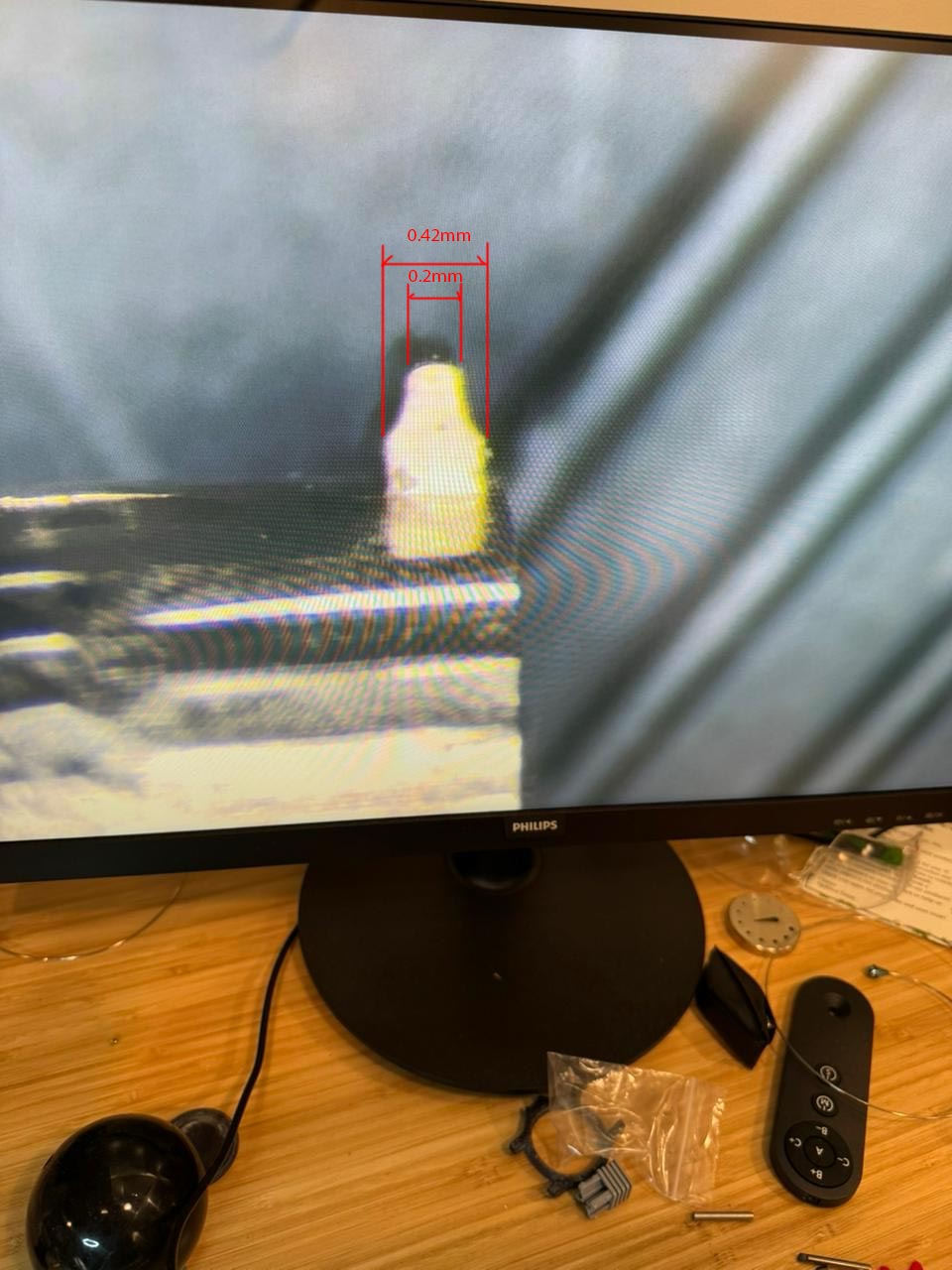
Breakthrough day. After 1.5 years of failed tests, tuning problems, and a 6-month sabbatical in the middle, we can finally produce the teeth for the wheels.

The bottleneck was not the geometry. It was the machine.

Getting the mill tuned tightly enough to hold ±0.003 mm took more than 20 failed attempts and months of trying.

Alexis cracked that part. He spent months learning the machine and motors well enough to get it behaving.

On my side, I rewrote the machine's Mach4 profiles and built a custom tool workflow because Fusion 360 fell short.

That hardware/software split changed everything.

Once the mill was stable, I could finally work on the cutter itself. Custom tool. Then custom toolpaths.

I kept polishing the G-code until the cuts stopped looking almost right and started looking usable.

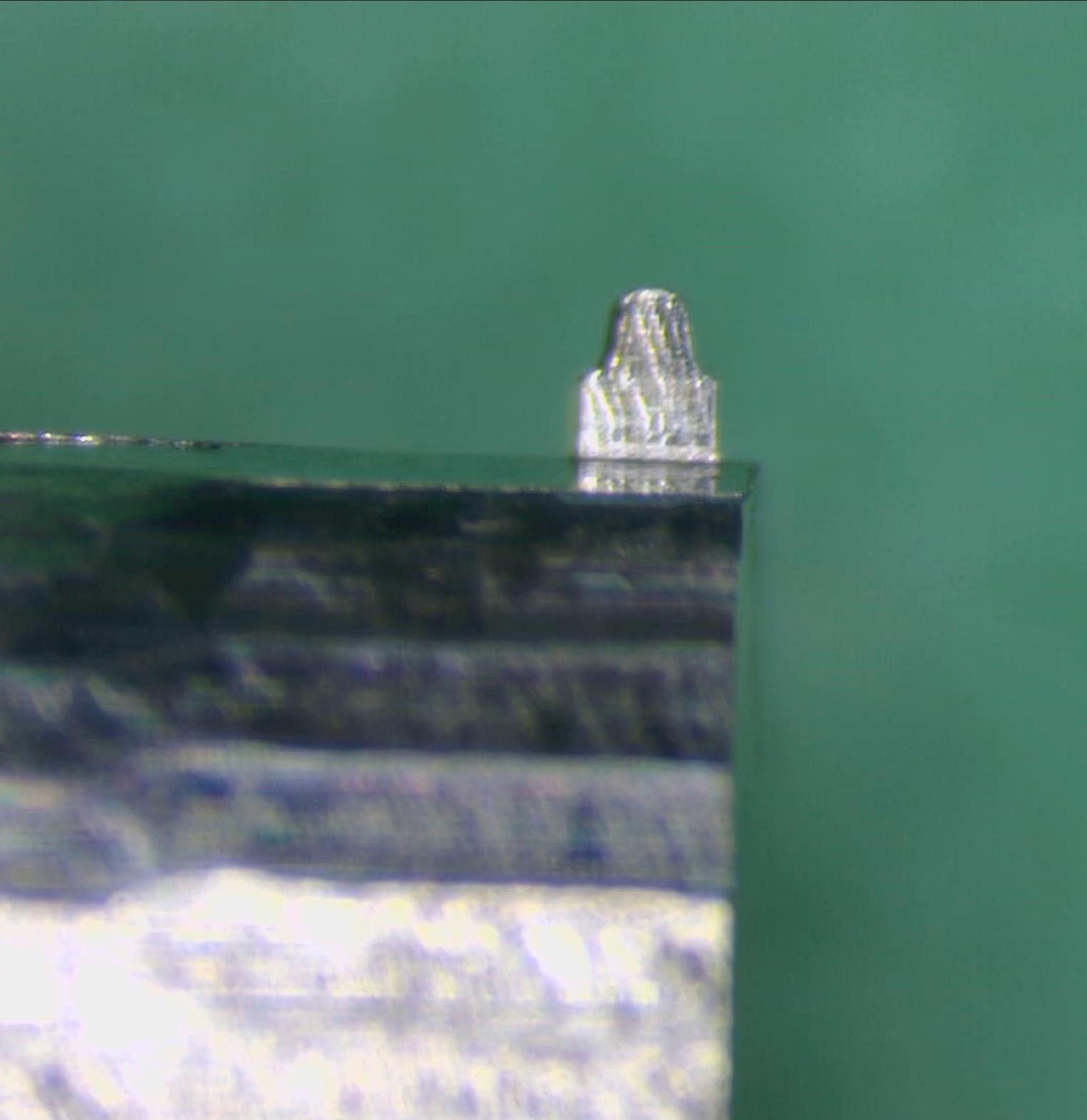
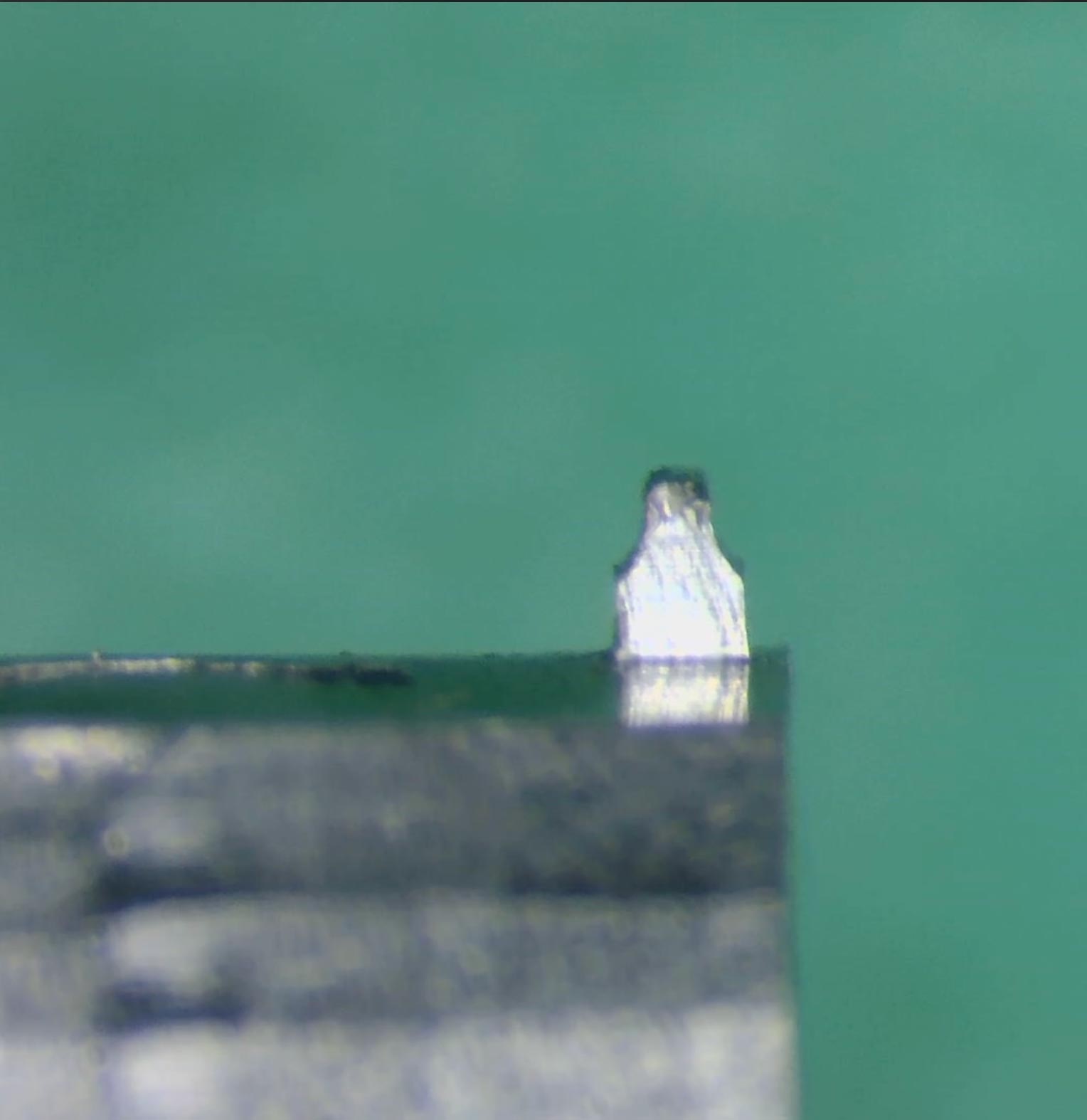
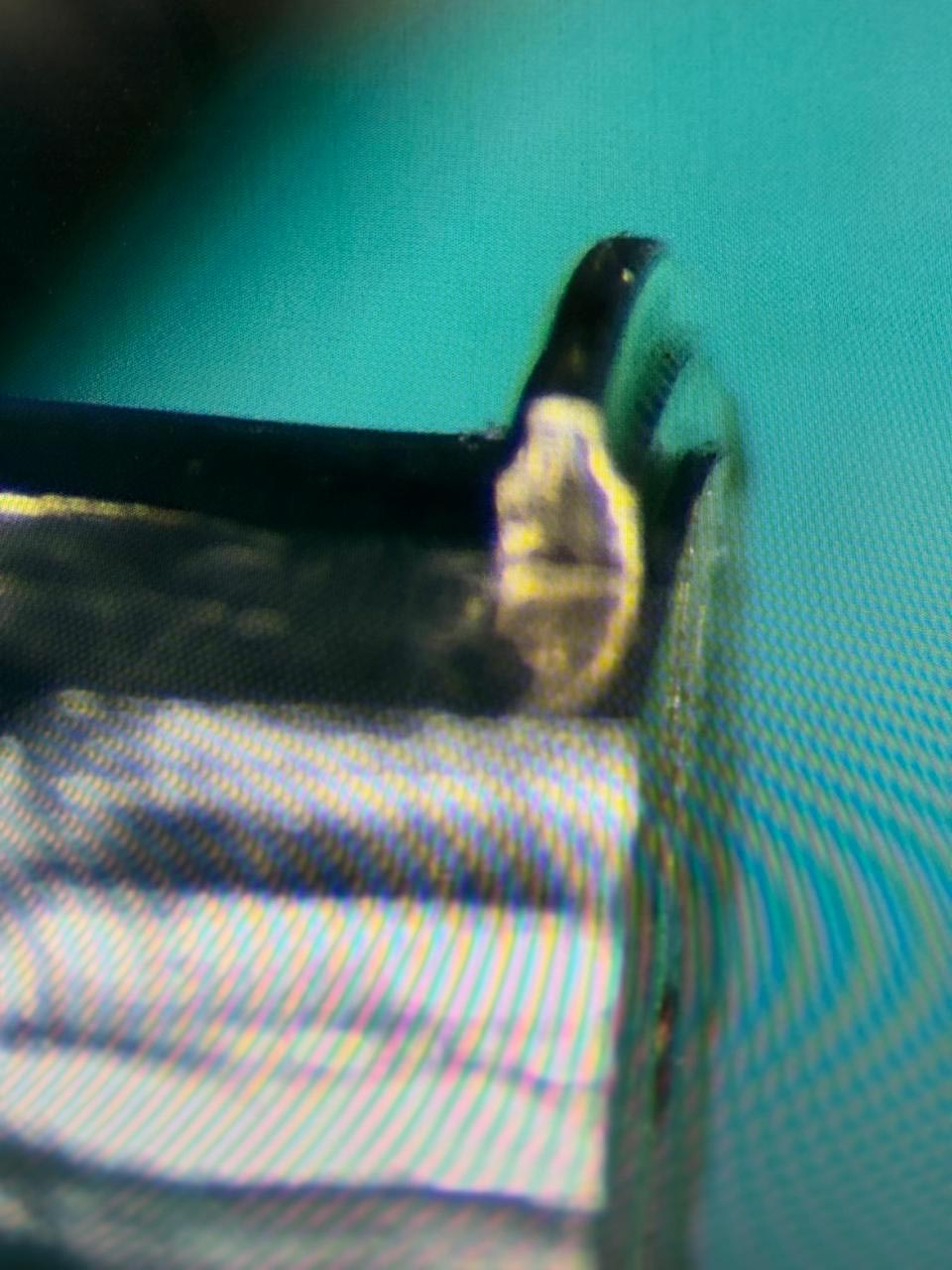
The first image is that moment: the mill cutting brass, and for the first time, we knew we were close.

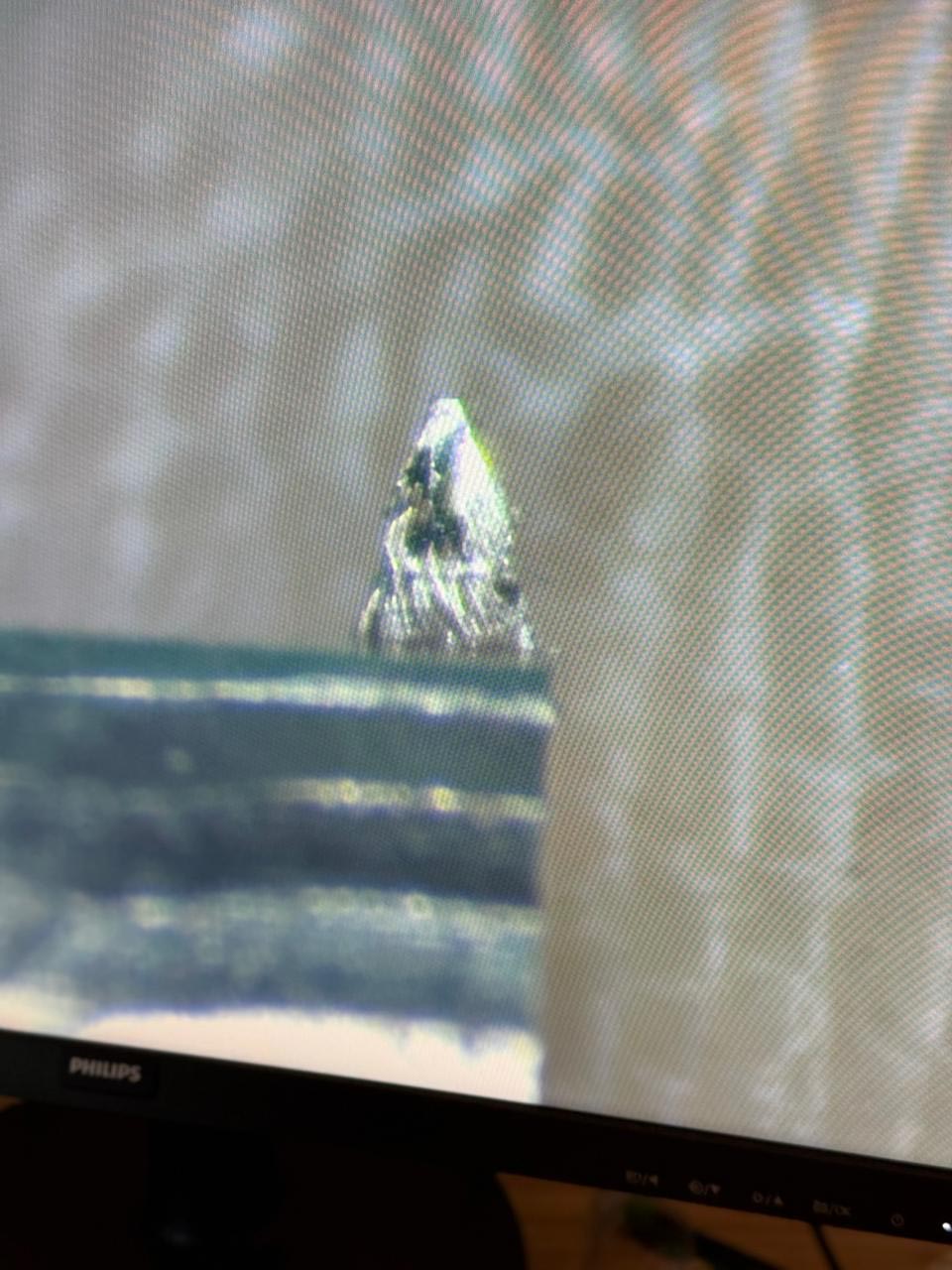
Then: success.

Honestly, this part was rough. Small errors. Tiny adjustments. No clean answer. Just measure, change one thing, and run it again.

What changed was the process. Not the final part.

  • Machine tuning to ±0.003 mm
  • Mach4 profiles rewritten
  • Custom tool made
  • Custom toolpaths and cleaner G-code
  • First successful cut in brass

Next step: mill the tool in A2 rod.

After that: a carbide version with diamond coating.

Brass proved the process. Now we move the material and the tool forward 🙂

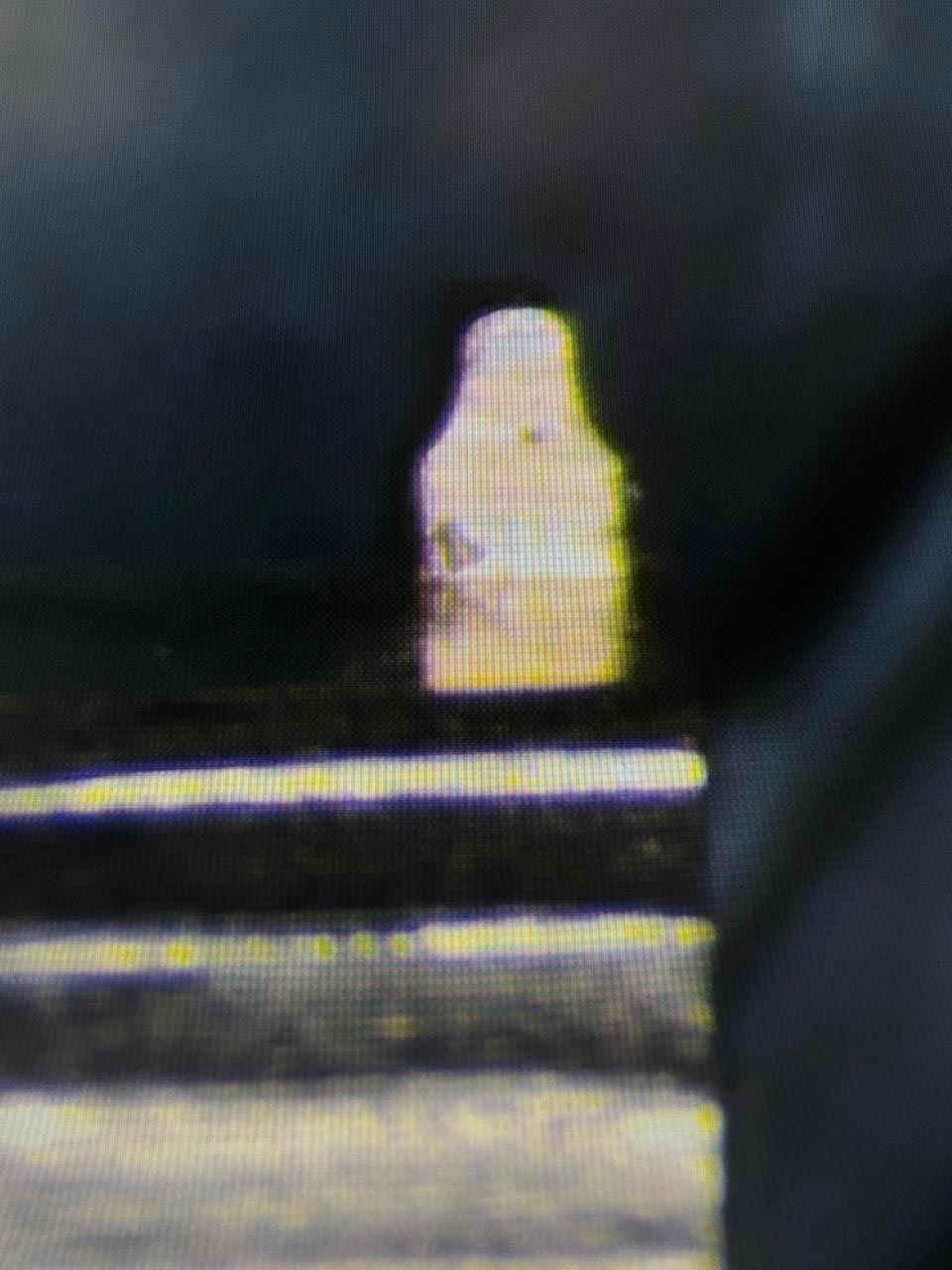
Success!

Look how tiny it is

Teeth pre-viz after cut

One of the last fails

Read standalone post

2026/04/15 18:37 UTC
TLDRThe carbide milling playground is now a real multi-material calculator, not just a static reference. It gives per-cutter feeds, RPM, and stepover, which makes the starting numbers more useful—now it just needs real-cut validation.
Show more Show less

Big upgrade to the carbide milling playground at See Here.

I pointed GPT-high 4dawin at it. It came back with fixes that actually changed how the tool works.

What changed

The biggest shift: it is not single-material anymore.

Now it handles multiple materials. Different stock, different assumptions, different numbers.

It also works bit by bit now. For each cutter, it calculates feeds, RPM, and stepover.

That was the real win. Less guessing. Better starting points. Internally consistent.

Why this matters

The old version felt too much like a static reference.

This one is closer to a system: material properties in, cutter data in, usable milling parameters out.

That framing changed the tool more than any one formula did.

What surprised me

Honestly, I did not expect the suggestions to be this practical.

It pushed on structure, inputs, and the small missing pieces that made the calculator feel half-finished.

Still early

The numbers are only as good as the assumptions behind them.

Machining has a way of humbling any neat model 😅

But this version feels more grounded already.

Next step

Test the recommendations against real cuts.

Then tighten the logic where reality disagrees. That is the fun part.

Read standalone post

2026/04/15 01:35 UTC
TLDRCore point: two real manufacturing breakthroughs today—custom wheel cuts that improve control, and repeatable two-sided milling at ±0.003 mm. It matters because these aren’t one-off lucky parts; they show a stable process that opens up better designs and more capable production.
Show more Show less

Two wins today.

First: custom wheel cuts.

Started with a traditional pattern—something readable. Change geometry from a known base.

Not decoration. Control.

Toolpath, workholding, runout, burrs, edge finish
 it all shows. On a wheel, looks = mechanics. If it shifts or raises burrs, it’s wrong.

Second: proper two-sided milling. Finally 🙂

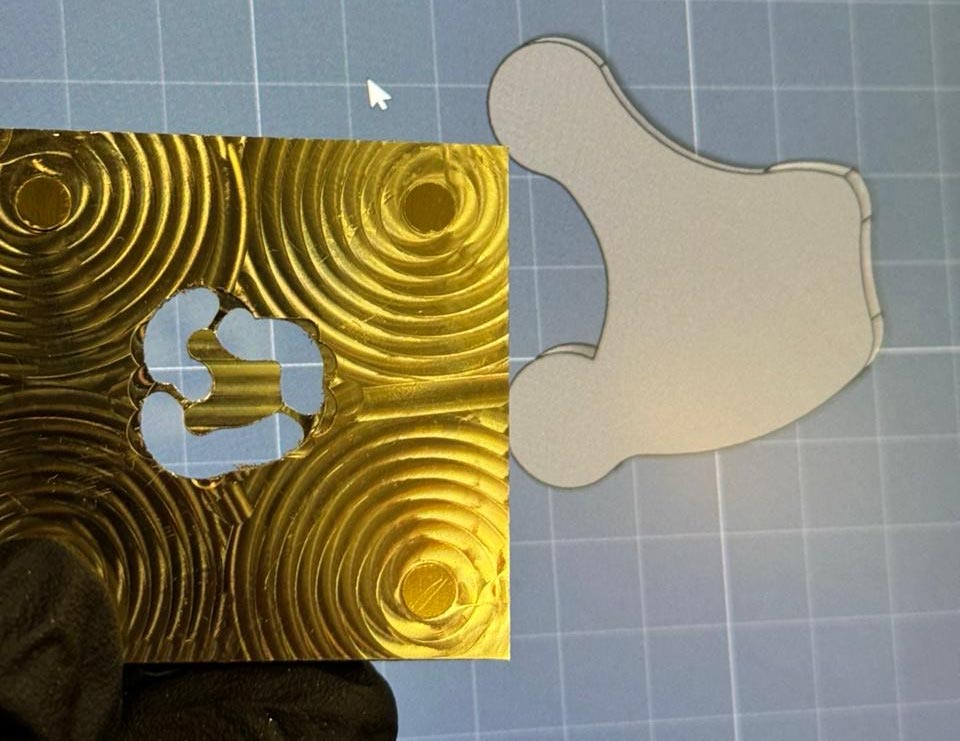
We can hold the stock properly now. Cut both sides and have them agree. ±0.003mm.

This took almost 2 years of frustration. Mostly fighting a truly awful machine vendor (NSCNC).

Now: features line up. Thickness holds. Second op looks intentional 👍

Not a lucky part. A process.

Still early. But this opens things up—design, and what we can actually make.

Two quiet wins. Feels good.

Read standalone post

2026/04/13 19:27 UTC
TLDRCore point: instead of fixing broken CAD history by hand, script the model so the real design rules live in one place and you can rebuild cleanly. It matters because changing a core assumption becomes one edit plus regenerate, not an afternoon of chasing red features.
Show more Show less

Complex CAD models have a way of turning one small fix into a full afternoon. You go back to change one early feature, and suddenly half the history tree is red. References break. Sketches lose their parents. Things that looked stable start moving in ways you did not ask for.

That is not really a software problem. It is what happens when a design gets complicated enough that too many later decisions depend on too many earlier ones. A model can look clean on screen and still be held together by a few fragile assumptions that no longer make sense a month later.

I have been hitting that wall hard enough that I started changing the approach instead of just patching the fallout. Instead of manually repairing or rebuilding the design every time I want to change something fundamental, I am working on a script that generates the whole thing for me.

Why script it at all?

The point is not automation for its own sake. The point is to put the real rules of the part in one place. Critical dimensions, relationships, patterns, and repeated operations go into code. Then the model gets rebuilt from first principles each time.

If a core assumption changes, I change it once and regenerate instead of trying to keep a long chain of downstream features alive.

What the script forces you to confront

That has already been the useful part. A script is less forgiving than a messy feature tree. It forces you to decide what actually drives the geometry, what is derived from something else, and what was just a convenient number typed in at 1 a.m.

If the design depends on a rule, the rule should be visible.

A better way to think about the part

This also feels closer to how I want to think about making parts in the first place: define the setup, define the constraints, define the sequence, then make the part.

That is a better fit for precision work than treating CAD like a pile of cosmetic edits balanced on top of each other.

Still early, but promising

It is still early, but it already feels like the right direction. Less repair work. Less fear of touching the foundation. More room to test ideas without wrecking the whole model.

I will share more once the script is far enough along to show what it fixes, and what kinds of problems it creates on its own.

Read standalone post

2026/04/03 14:16 UTC
TLDRThe project is back after six months, and the key win is reliable, repeatable precision. That matters because the real restart wasn’t motivation—it was fixing the hardware well enough to actually trust the machine.
Show more Show less

After six months away from the project, I’m finally starting again.

Getting back to it was not as simple as flipping the machine on and picking up where things left off. The real work was down in the hardware: machine setup, motor behavior, encoder feedback, and all the small details that decide whether a system is merely moving or actually moving with precision.

A big part of getting over that wall came from Alexis Paredes (@alexisparedesart on Instagram). Alexis put in the time, patience, and real attention needed to go deep into the setup with me. Not surface-level fixes, but the kind of careful troubleshooting that gets into the bones of the machine.

Thanks to that work, precision has finally been achieved in a way that feels solid and repeatable. That matters, because without trust in the hardware, everything that comes after is guesswork.

This restart feels different. Better grounded. Less about hoping the machine behaves, more about understanding why it does. That’s the kind of progress that actually holds.

So: the project is back on. And this time, it’s starting again from a much better place.

Thank you, Alexis.

Read standalone post

2025/09/03 00:29 UTC
TLDRSurprisingly, a budget-friendly micro drill has outperformed its more expensive counterparts, effectively drilling 0.3 mm holes, which is impressive in the world of watchmaking. While larger, pricier machines often fell short, this simple tool delivered precision and reliability, proving that even "entry-level" equipment can hold its own in a professional setting. It's a reminder that sometimes the most unexpected tools can make a big impact, keeping the journey of watchmaking both challenging and rewarding. 🔧
Show more Show less
sketch

Today I set up a new tool on the bench: a micro drill. It was inexpensive, I didn’t expect much from it, and honestly, I assumed it would be more of a curiosity than a serious addition. To my surprise, it performed better than expected — drilling clean holes as small as 0.3 mm in diameter. For anyone who has worked in watchmaking, that’s quite impressive for such a modest machine.

Comparisons and Expectations

When I purchased my Elara 2 and Lathe 3, I was advised that my existing equipment — a Sherline mill and a traditional watchmaker’s lathe — were toys, and would not provide the level of precision required for professional results. That seemed fair at the time; after all, these tools are often categorized as entry-level or hobby-grade.

Yet, a year later, the contrast has been eye-opening. While the larger machines have severle underferformed, this small micro drill has quietly demonstrated the ability to handle delicate work with confidence. It wasn’t supposed to be a precision hero, but in this case it has shown what’s possible on a smaller scale.

The Value of Simple Tools

There’s something encouraging about this. The micro drill isn’t overcomplicated, it isn’t marketed as cutting-edge, and it certainly didn’t cost a fortune. But it delivered where I needed it to. Sometimes, the simplest tools can step up in ways that more complex systems do not.

Looking Ahead

I won’t claim this micro drill replaces a full CNC, or that it solves all the challenges of watchmaking. But it has reminded me that progress can come from unexpected places. Tools often described as “entry-level” or “for hobbyists” still have their place in a serious workshop. And in this case, they’ve proven surprisingly capable — drilling holes that the more advanced machines have not yet been able to produce in my experience.

It’s a small victory, but one that keeps me motivated. Watchmaking is a long journey, and sometimes the most pleasant discoveries come from the tools you least expect.

Read standalone post

2025/09/02 10:32 UTC
TLDRA year with the Elara 2 CNC machine taught me a ton about machining, but didn't deliver a single usable part due to its lack of promised precision. Despite trying everything, including professional help, the machine's performance fell short of the micron-level accuracy crucial for watchmaking. While the experience was a lesson in persistence and technical learning, it left a significant gap between expectation and reality, driving me to explore new hardware solutions.
Show more Show less

It’s been a full year since the Elara 2 arrived in my workshop. In that time, I’ve poured countless hours into learning, testing, measuring, and refining. From CAM strategies in Fusion 360, to experimenting with feeds, speeds, and even multiple spring passes, this year has been an education in CNC machining unlike anything I could have imagined.

What I Learned

I didn’t step into this as an expert machinist. Quite the opposite. The Elara was supposed to be my bridge into precision watchmaking — a machine marketed with ±0.00001″ accuracy (0.0003 mm) and ±0.0002″ repeatability (0.005 mm). Numbers like that made it sound like a tool perfectly aligned with the microscopic tolerances of horology.

Over the year, I learned how much goes into producing reliable parts: tool deflection, thermal drift, motion control, encoders, and the subtle ways CAM paths can influence a cut. These lessons are valuable in their own right. But they’ve also been overshadowed by one stubborn truth.

Zero Parts Produced

Despite all the effort, I have not produced a single usable watch component on the Elara. Every test, every trial, has run into the same wall: the machine simply cannot hold the advertised precision.

  • Air passes: about 4 microns off
  • Cutting aluminum:
    • X-axis: ~33 ”m off
    • Y-axis: ~50 ”m off
    • Z-axis: ~85 ”m off

For context: in watchmaking, a 50 ”m error might as well be a canyon. Wheels don’t mesh, pinions don’t seat, plates don’t align. The promise of micron-level accuracy never showed up in practice.

The Gap Between Promise and Reality

It’s not that I haven’t tried. I’ve worked with outside engineers, tested with professional tools, and even reached out to NSCNC repeatedly. I’ve done everything a reasonable user could do. And yet, the reality remains: one year later, not a single part.

The most difficult part isn’t just the lost time. It’s the gap between expectation and reality. Buying a machine based on a specification that later gets revised downward isn’t just frustrating — it undermines trust.

Looking Ahead

While the Elara hasn’t delivered, the year hasn’t been wasted. I’ve learned more than I thought possible about machining, measurement, and persistence. And I’m already exploring new hardware paths, from upgrading motors and encoders, to rewriting the machine profiles from scratch. If anything, this experience has strengthened my resolve to keep going — because in watchmaking, persistence is the only way forward.

Still, the fact remains: after one year, the Elara has given me plenty of lessons, but zero parts. And that, more than anything, says what needs to be said about its precision.

Read standalone post

NOSTR:

npub1nvhq9vgkpahlugwcf3jsnpaq5lj3w3rk6lknnvf9r8h8ft2ja2asaqcn2a
Copyright 2025 The bitcoin watchmaker